


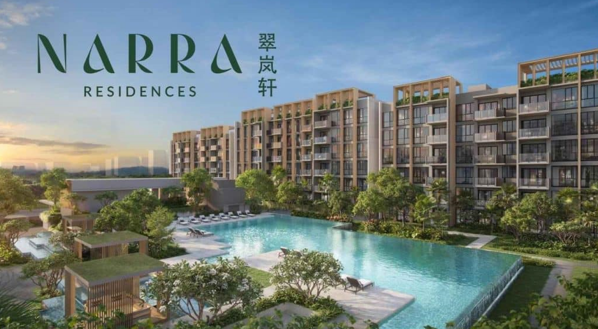
Decision certainty has become a defining factor for buyers who intend to commit to long-term living in Singapore’s residential market. As buyer priorities mature, homes are no longer selected purely on visual appeal or short-term convenience. Instead, buyers seek confidence that their decision will remain sound over time, even as lifestyles, responsibilities, and daily routines evolve. This growing emphasis on certainty reflects a deeper understanding of how residential choices affect long-term comfort and stability.
In developments such as Narra Residences, buyers often associate decision certainty with clear planning logic and predictable spatial performance. When a home demonstrates consistency in how it supports everyday living, buyers feel reassured that their choice aligns with long-term expectations rather than temporary preferences.
Understanding Decision Certainty in Long-Term Living
Decision certainty refers to a buyer’s confidence that a home will continue to meet functional, emotional, and lifestyle needs over an extended period. It is shaped by how clearly a buyer can understand the home’s performance beyond the initial years of occupancy. Homes that feel ambiguous or overly dependent on future changes tend to introduce hesitation, especially for buyers planning long-term residence.
For long-term buyers, certainty reduces anxiety around future compromises. When layouts, circulation, and space usage are easy to interpret, buyers are more comfortable committing. This clarity allows them to envision daily life over time without constantly questioning whether the home will remain suitable.
Why Long-Term Buyers Prioritise Predictability
Predictability plays a central role in long-term residential decision-making. Buyers who intend to stay for many years want assurance that their home will not require frequent adjustments, renovations, or workarounds to remain comfortable. Homes that perform consistently reduce the mental and financial burden associated with uncertainty.
Predictable homes support routines more naturally. Spaces feel intuitive, movement flows logically, and daily activities are accommodated without friction. Over time, this predictability enhances satisfaction and reinforces the buyer’s confidence in their decision.
Decision Certainty and Residential Stability
Decision certainty directly influences residential stability. When buyers feel confident in their choice, they are far more likely to remain long-term. This reduces turnover and creates more settled residential communities. Stable occupancy also encourages residents to take greater ownership of shared spaces and neighbourhood well-being.
Long-term stability benefits the broader residential ecosystem. Developments with long-term residents often experience more consistent maintenance standards, stronger community identity, and steadier demand. These outcomes are increasingly valued in a market that is moving away from speculative behaviour.
Evaluating Certainty in Urban Residential Developments
In the middle of the evaluation process, buyers often compare how different developments support long-term certainty. Urban projects such as River Modern, are frequently assessed through this lens, particularly in terms of how design decisions translate into real, everyday usability.
Buyers examine whether compact urban living can still deliver clarity, comfort, and adaptability. Attention is given to layout balance, circulation efficiency, and the ability of spaces to support evolving needs without disruption. This evaluation highlights a shift toward performance-based assessment rather than reliance on location or branding alone.
Emotional Confidence and Long-Term Commitment
Beyond functional performance, decision certainty also has an emotional dimension. Buyers who feel confident in their choice develop a stronger sense of attachment to their home. This emotional security encourages deeper engagement with the living environment and surrounding community.
When residents are not preoccupied with doubts about their decision, they are more likely to invest time and effort into maintaining their home and building social connections. Over time, this contributes to a more cohesive and resilient residential environment.
Market Implications of Certainty-Driven Demand
From a market perspective, decision certainty supports healthier demand patterns. Developments that inspire confidence tend to attract buyers seeking permanence rather than short-term gains. This results in more consistent pricing and reduced volatility.
Certainty-driven demand also enhances a development’s long-term reputation. Homes known for reliability and usability remain attractive even as market conditions change, reinforcing their position within a competitive residential landscape.
Conclusion
Decision certainty has emerged as a cornerstone of long-term residential confidence in Singapore. Buyers increasingly prioritise homes that offer clarity, predictability, and dependable performance over time. As expectations continue to mature, residential success will be defined less by short-term appeal and more by how effectively a home supports everyday living across life stages. Developments that provide this level of certainty are better positioned to attract committed residents and sustain long-term market confidence.