
Small kitchens present a common challenge: limited square footage combined with the need to store dishes, cookware, food, tools and appliances. Effective organization focuses less on adding more furniture and more on using every available inch of height, depth and overlooked surface. Thoughtful solutions can free counter space, improve accessibility and make the kitchen feel larger and more functional.
Start with Decluttering and Zoning
Before introducing organizers, remove items that are rarely used, duplicated or no longer needed. Keep only essential tools and the quantities of dishes and gadgets that match daily cooking habits. Group remaining items by function and create zones: a prep area with knives, boards and mixing tools; a cooking zone near the stove for pots, pans, oils and utensils; and a cleaning zone around the sink for soaps, sponges and related supplies. Storing related items together reduces unnecessary movement and keeps counters clearer.
Maximize Vertical Space Inside Cabinets
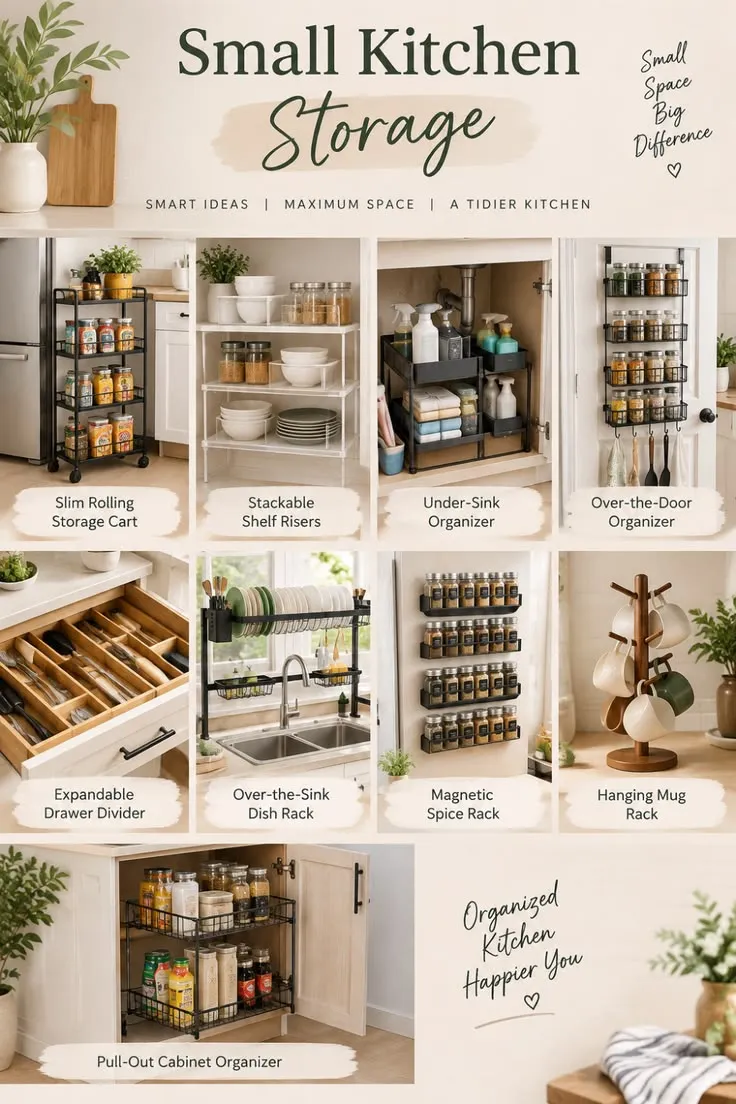
Cabinets often waste height. Shelf risers create a second level so plates can sit below bowls or mugs can stack above glasses without unstable towers. Expandable versions adjust to different cabinet widths and deliver immediate capacity gains.
Under-shelf baskets or racks capture the empty air beneath existing shelves. These hold towels, wraps, tea bags or lightweight items without requiring tools or permanent installation. Vertical dividers or upright racks for baking sheets, cutting boards, cooling racks and lids make it easy to retrieve one item without disturbing a stack. Storing these pieces on their sides functions like a filing system and uses depth more efficiently than horizontal piles.
Cabinet doors offer additional real estate. Over-the-door racks, adhesive hooks or slim spice organizers turn the inside of doors into useful storage for measuring spoons, lids, wraps or frequently used seasonings.
Free Up Countertops
Clear counters transform the feel of a small kitchen. Limit surface items to those used daily, such as a coffee maker or a frequently needed utensil crock. Store less-used appliances in a lower cabinet, a deep pull-out drawer or a dedicated “appliance garage” basket that keeps them accessible yet out of sight.
Magnetic knife strips mounted on a wall or the side of a cabinet eliminate the need for a bulky knife block. Wall-mounted rails with S-hooks hold utensils, measuring cups or lightweight pans, moving them off the work surface while keeping them within easy reach. A two-tier corner shelf can stack items such as a fruit bowl and mugs in a footprint that previously held only one.
Use Overlooked Gaps and Surfaces
Narrow spaces beside the refrigerator or between cabinets can accommodate slim rolling carts. These carts provide multi-tier storage for spices, oils, canned goods or cleaning supplies and slide out when needed. The sides of the refrigerator or exposed cabinet ends can support magnetic shelves, spice racks or utensil rails.
If renovations are possible, converting the toe-kick area under base cabinets into shallow drawers creates storage for flat items such as sheet pans, platters or linens. Even without construction, the area under the sink benefits from tiered organizers or stackable bins that work around plumbing.
Drawers and Lower Storage
Drawers become far more useful with dividers. Adjustable bamboo or spring-loaded inserts create dedicated lanes for cutlery, utensils, gadgets and wraps so items stay visible and easy to grab. Deep lower cabinets gain accessibility with pull-out shelves or organizers that bring contents forward instead of requiring users to reach into dark recesses.
Heavy items such as pots, pans and small appliances belong in lower storage for safety and convenience. Lighter, less frequently used pieces can move to higher shelves or above-cabinet space when available.
Walls, Ceiling and Open Storage
Open wall space between the counter and upper cabinets or on unused walls can support floating shelves, pegboards or simple rails. These hold everyday dishes, spices or decorative yet functional items without consuming floor or counter area. Ceiling-mounted pot racks free cabinet space for other goods, provided the ceiling height and structural support allow safe installation.
Hanging solutions under upper cabinets, such as stemware racks or mug hooks, utilize previously empty air. These keep frequently used items visible and accessible while preserving shelf capacity inside the cabinets.
Practical Habits for Long-Term Order
Organization systems work best when they match actual usage patterns. Place the most-used items at eye level or in the easiest-to-reach spots. Store backups and seasonal pieces higher or farther away. Clear containers or labeled bins help maintain visibility, especially for pantry goods, and square shapes often use space more efficiently than round ones.
Regular quick resets prevent buildup. Returning items to their zones after use and periodically reviewing what has accumulated keep the system functional. Choosing dual-purpose tools or nesting sets further reduces the total volume of items that need housing.
Creating a More Usable Kitchen
Small kitchens reward intentional choices. By reclaiming vertical space with risers and under-shelf solutions, moving storage onto walls and doors, utilizing narrow gaps, and keeping counters clear of non-essentials, even compact spaces become efficient and pleasant to work in. The most successful approaches combine simple, affordable organizers with consistent habits of returning items to designated homes. The result is a kitchen that supports cooking and gathering without the constant frustration of clutter or wasted space.
Read more – gloryhouseworld.com