
Homeowners assume rising summer energy bills are always caused by an overworked air conditioning system. In reality, poor airflow from a faulty ceiling fan can quietly make cooling problems worse throughout the home. Weak circulation forces air conditioners to run longer and work harder to maintain comfortable temperatures. In many cases, professional help for issues such as ceiling fan repair in Naches, WA can improve airflow, restore comfort, and help reduce unnecessary cooling costs.
Ceiling fans play a bigger role in home comfort than many people realise. When they work properly, they help distribute cool air evenly, reduce hot spots, and support overall HVAC efficiency. However, when fans become damaged, unbalanced, or electrically faulty, they can contribute to higher electricity usage without homeowners noticing straight away.
How Ceiling Fans Support Home Cooling Efficiency
Ceiling fans do not lower room temperature directly, but they improve how cool the room feels by moving air consistently throughout the space. This creates a wind-chill effect that helps people feel more comfortable even when thermostat settings remain slightly higher.
A properly working ceiling fan offers several benefits:
● Improves indoor air circulation
● Reduces pressure on air conditioning systems
● Helps maintain even room temperatures
● Supports energy-efficient cooling
● Reduces humidity buildup in certain areas
When airflow becomes restricted because of fan problems, rooms often feel warmer and less comfortable. As a result, homeowners tend to lower thermostat settings, increasing cooling costs over time.
The Importance of Correct Fan Direction
Many homeowners overlook ceiling fan direction during warmer months. During summer, blades should rotate counterclockwise to push cool air downward. If the fan rotates the wrong way, airflow weakens and rooms may feel stuffy despite constant AC use.
This small adjustment can noticeably improve indoor comfort and reduce strain on cooling systems.
Signs Your Ceiling Fan May Be Increasing Energy Costs
Ceiling fan problems often develop gradually. Because the fan may still operate partially, homeowners sometimes ignore early warning signs until cooling costs begin climbing.
Common signs include:
● Weak or inconsistent airflow
● Wobbling during operation
● Clicking or grinding noises
● Slow fan speeds
● Flickering attached lights
● Burning smells from the motor
● Sudden increases in electricity bills
Even minor airflow issues can reduce overall cooling efficiency throughout the home.
Common Ceiling Fan Problems That Affect Indoor Comfort
Several mechanical and electrical problems can interfere with ceiling fan performance. Some issues affect airflow directly, while others create hidden energy waste behind the scenes.
Dirty or Unbalanced Fan Blades
Dust accumulation on blades affects balance and airflow efficiency. Over time, uneven blade weight can cause wobbling, excessive noise, and motor strain.
Unbalanced blades also reduce the fan’s ability to distribute cool air properly across the room.
Worn-Out Motor Components
As ceiling fan motors age, they may struggle to maintain consistent speed. Slower operation means weaker airflow, forcing air conditioning systems to compensate for reduced circulation.
Older motors may also consume more electricity while delivering less performance.
Faulty Capacitors
Capacitors control fan speed and starting power. When they fail, fans may operate slowly, stop unexpectedly, or struggle to start altogether.
This is a common issue in older ceiling fans and often requires professional electrical repair.
Loose Electrical Connections
Loose wiring can create inconsistent performance, flickering lights, or overheating. Electrical faults should never be ignored because they can eventually become safety hazards.
How Ceiling Fan Problems Increase Cooling Costs
A malfunctioning ceiling fan can indirectly raise cooling bills in several ways. While the fan itself may use relatively little electricity, poor airflow affects the overall efficiency of the home’s cooling system.
Longer Air Conditioning Cycles
When cool air is not circulating properly, rooms remain unevenly cooled. This causes thermostats to trigger longer AC cycles in an attempt to reach desired temperatures.
Over time, this increases electricity consumption significantly.
Increased HVAC Wear and Tear
Air conditioning systems work hardest during summer months. When airflow issues force the system to operate continuously, components experience more strain and wear.
This can eventually lead to:
● Reduced HVAC lifespan
● More frequent repairs
● Higher maintenance costs
● Lower cooling efficiency
Hidden Energy Waste
Many homeowners never connect ceiling fan issues with higher energy bills. Because the changes happen gradually, cooling inefficiency often goes unnoticed until seasonal electricity costs become unusually high.
DIY Ceiling Fan Maintenance Tips
Basic maintenance can improve performance and help prevent larger problems from developing.
Clean Fan Blades Regularly
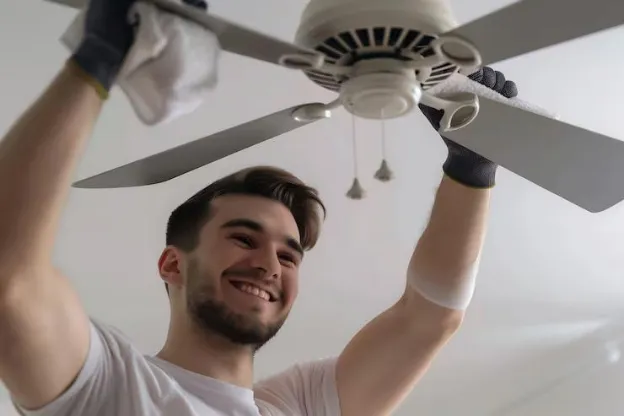
Dust buildup affects both balance and airflow. Cleaning blades every few weeks improves efficiency and reduces unnecessary motor strain.
Tighten Loose Screws
Loose screws around the blades or mounting bracket often cause wobbling and noise. Carefully tightening hardware can stabilise fan performance.
Check Blade Alignment
Misaligned blades disrupt airflow and place stress on the motor. Blade balancing kits are available for minor adjustments.
Test Fan Speeds
If certain speed settings stop working properly, the issue may involve wiring or capacitor failure that requires professional inspection.
When Professional Repairs Become Necessary
Some ceiling fan problems should always be handled by qualified professionals, particularly when electrical components are involved.
Professional repair may be necessary if you notice:
● Burning smells
● Overheating motors
● Persistent wobbling
● Electrical buzzing sounds
● Flickering lights
● Sudden power loss
● Repeated circuit breaker trips
Addressing these issues early can prevent larger electrical or HVAC-related problems later.
Additional Ways to Reduce Summer Cooling Costs
Ceiling fan maintenance works best alongside broader energy-efficiency improvements throughout the home.
Helpful strategies include:
● Replacing HVAC air filters regularly
● Sealing windows and doors
● Improving attic insulation
● Using programmable thermostats
● Closing blinds during peak afternoon heat
● Scheduling seasonal HVAC inspections
Combining proper airflow with efficient cooling practices creates a more comfortable and cost-effective indoor environment.
Conclusion
Ceiling fans are an important part of maintaining comfortable indoor temperatures during warmer months. When they stop working efficiently, airflow problems can quietly increase cooling costs while placing additional pressure on air conditioning systems.
Small issues such as weak airflow, wobbling blades, or worn electrical components may seem minor at first, but they often lead to larger energy-efficiency problems over time. Regular maintenance and timely repairs help improve air circulation, reduce strain on HVAC systems, and support lower electricity bills throughout the summer season.